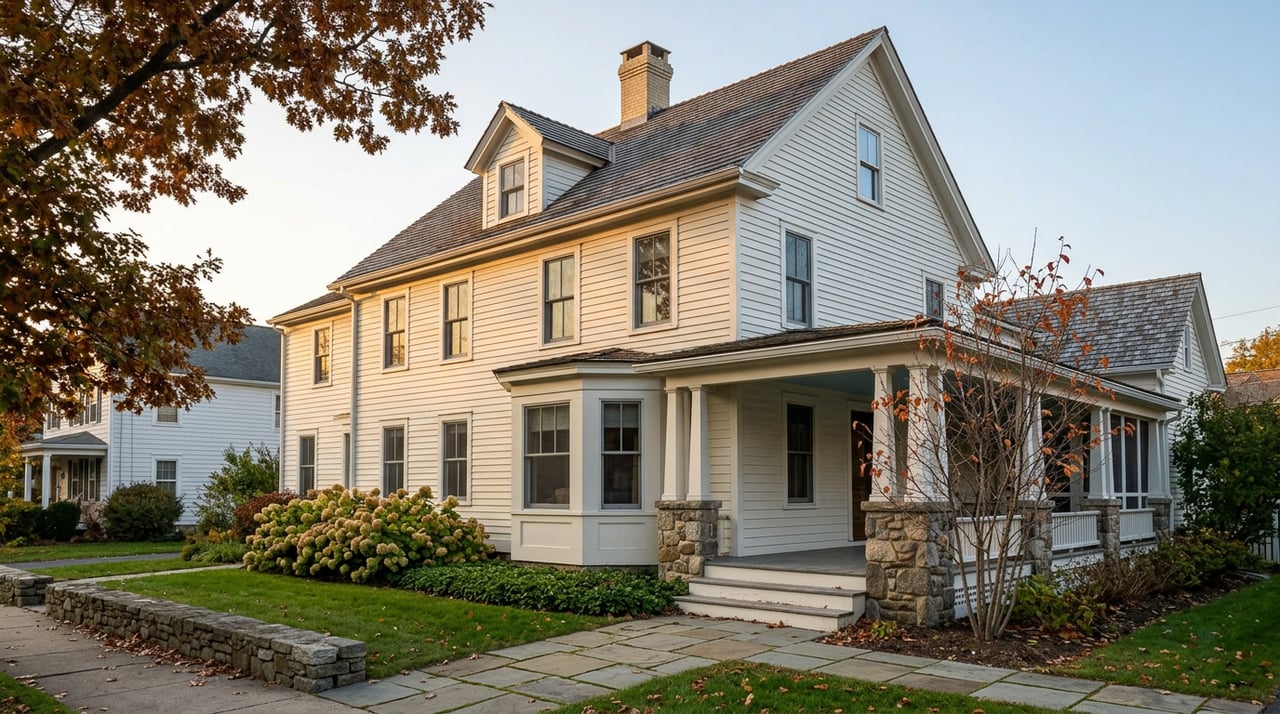
Excelsior Fought For Two Years Over How Big A New House Could Get. The Cottages Are Still Priced Like It Never Ended.
September 24, 2026
September 24, 2026
A buyer closes on a two-bedroom cottage a few blocks off Water Street. The inspection came back clean, the offer went through without a fight, and the movers are booked for next weekend. Then a contractor stops by to quote new siding and asks a question the closing paperwork never raised: has the seller filed a Site Alteration Permit for this?
The buyer has never heard of one. The house isn't on any list they saw in the listing description. But the moment a contractor tries to swap materials on the exterior of a home inside Excelsior's Downtown Historic District, or one carrying an individual Heritage Preservation Landmark designation, the project stops being a simple building permit and becomes a City Hall application that a commission has to review before anyone touches a wall.
That single fact, easy to miss until a contractor raises it, explains more about why Excelsior's oldest, smallest homes hold their value than any charm-of-the-lake description ever will.
Excelsior's Heritage Preservation Commission requires a Site Alteration Permit for exterior work on any building it has designated a Landmark, and on any structure inside the Downtown Historic District, whether that building is officially "contributing" to the district's character or not. The list of triggers is longer than most buyers expect: new siding, roofing that changes material or texture, added or removed awnings, shutters, canopies, additions, and demolition all require review. Applications go to City Hall, then to the Heritage Preservation Commission, then to the City Council for final sign-off, a sequence that runs on its own schedule, not the seller's or the contractor's.
Repainting sits in a strange middle ground. It technically requires a permit application, but the commission's opinion on paint color is advisory rather than binding. That's a small detail, but it says something bigger: this isn't a commission trying to control every choice a homeowner makes. It's a process built around the exterior changes that actually alter how a building reads from the street, which is precisely the kind of nuance a buyer only learns by asking, not by reading a listing sheet.
Not every old house in Excelsior carries the same obligations, and the differences matter enough to map out before an offer, not after.
| Designation | Where it applies | Site Alteration Permit for exterior work | Building permit fee reduction |
|---|---|---|---|
| Individual Landmark | One of 29 properties the city has designated, out of 147 historic properties it has surveyed citywide | Yes, HPC review then Council approval | 50% off |
| Contributing structure | One of 59 buildings inside the 74-structure Downtown Historic District | Yes | 25% off |
| Non-contributing structure | The remaining buildings inside that same historic district boundary | Yes, same review, no charm discount to soften it | None |
| Home outside any historic boundary | Everywhere else in Excelsior | No, standard building permit only | None |
The fee reductions are the part almost nobody mentions at a showing. A homeowner restoring an individually designated Landmark pays half the building permit fee that a homeowner elsewhere in town would pay for the same scope of work. Restore a contributing structure inside the historic district and the discount is a quarter off. The city is not just adding friction to these projects. It's subsidizing the extra process, which tells you Excelsior wants this housing stock maintained more than it wants to slow anyone down.
None of this exists in a vacuum. In 2018, Excelsior's City Council froze residential redevelopment citywide after a run of teardowns, 25 houses demolished and replaced over the previous five years, prompted a rewrite of the single-family zoning code. The moratorium was aimed at tightening height and setback rules before the next construction season could produce more of the same.
The new rules that came out of that freeze didn't settle the argument. By 2020, some residents were pushing for what the Star Tribune described as some of the strictest zoning rules in the state, including a size cap tied to lot dimensions and a review board empowered to reject proposed construction outright. One property owner preparing to move to Excelsior put the tension in plain terms at the time: on many of these small lots, the dirt was worth more than the house sitting on it.
That line is the whole mechanism in one sentence. When a city makes it harder to tear down a small old house and put up something three or four times its size, the ceiling on new construction becomes the floor under the value of what's already standing. The same Star Tribune reporting noted that Excelsior's median home value had climbed to $554,000 by 2020, more than double the broader metro's $242,000 at the time, a gap that reflects exactly this dynamic: buyers weren't just paying for square footage, they were paying for a footprint that regulation had made scarce.
If that sounds like a settled debate from a few years back, it isn't. In May 2026, the Star Tribune reported on a fight over a vacant parcel at 10 Water Street, next to the former Dock Cinema, a building that dates to the 1940s after fire destroyed its predecessor during World War II. A developer wants to redevelop the site with a mix of apartments, retail, and a reimagined theater space, calling it the last prime location in the lakeside downtown. Preservation advocates see the same stakes that drove the 2018 moratorium: how much of downtown's character survives the next wave of investment.
The residential and commercial versions of this fight are really the same fight, playing out on different blocks. Anyone buying inside the historic district or near it should read that Water Street debate as a live signal, not a historical footnote. The regulatory ceiling that makes existing cottages valuable is still being tested in real time.
A few questions answer most of what a buyer or a homeowner planning work actually needs to know, and they're worth asking before an offer goes in, not after closing.
None of these questions show up in a standard inspection report. They live at City Hall, in the Heritage Preservation Commission's files, and in the zoning code itself.
Does a Site Alteration Permit apply to work that isn't visible from the street? The permit governs exterior alterations to the building itself, including additions and material changes like siding or roofing. Interior remodeling that doesn't touch the exterior generally falls under a standard building permit instead.
If a house is inside the historic district but classified as non-contributing, is it easier to tear down? It still requires a Site Alteration Permit for demolition, and it's still subject to the citywide setback and height limits that came out of the 2018 to 2020 zoning rewrite. Non-contributing status affects how the commission weighs the building's historic value. It does not exempt the lot from current zoning.
Who actually approves a Site Alteration Permit, and how long does that take? Applications are filed with City Hall and reviewed by the Heritage Preservation Commission, with final approval from the City Council. Because it's a two-step public process rather than a single staff sign-off, it runs on a meeting schedule, which is worth building into any renovation timeline from the start.
Buying into Excelsior's historic core means buying into a set of rules that shaped the price before the listing ever went live. Understanding which category a property falls into, and what that means for a renovation budget or a resale plan, is the kind of groundwork that pays off long before closing day.
If you're weighing a purchase inside Excelsior's historic district, or wondering what your current home there is actually worth given everything the zoning code allows and restricts, Morgan Real Estate Group can walk through the specifics with you. Request Your Home Valuation to start that conversation.
Stay up to date on the latest real estate trends.


It is our plan to continue this tradition and we look forward to serving you.