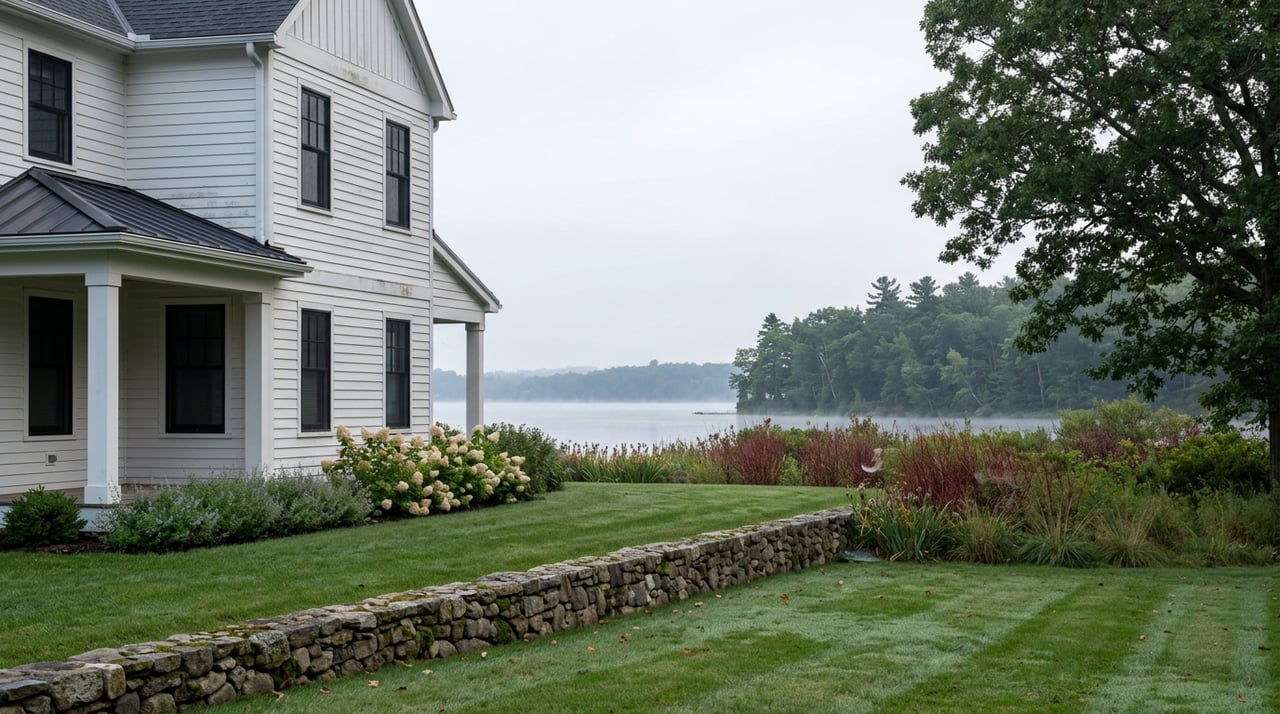
Why Two Wayzata Lakefront Homes At The Same Price Aren't Worth The Same Thing
August 13, 2026
August 13, 2026
A buyer's agent pulls up two Wayzata listings side by side. Same bay, same lot size, same asking price to the dollar. One turns out to be a straightforward purchase. The other stalls for three weeks while a survey gets pulled, a call goes to the city, and someone finally explains why the deck the sellers pointed to as a selling point can never be built any bigger.
That gap rarely shows up in a listing description. It shows up in the impervious surface calculation, the setback history, and the dock paperwork, three things that determine what a Wayzata lot can actually become long after the price has been negotiated. If you are comparing homes here on price per square foot alone, you are comparing the wrong number.
As of July 2026, Wayzata's median list price sat at $1.99 million, down 2 percent from a year earlier, with homes spending a median of 56 days on the market, matching last July's pace. That single figure is the one most buyers anchor to, and it is also the one that tells you the least about what you are buying.
Zillow's smoothed home value index put the typical Wayzata home closer to $886,000 as of January 2026, a very different number measuring a very different thing: a rolling estimate across the whole housing stock rather than a snapshot of what is currently listed. Meanwhile, Wayzata's true lakefront segment moves on its own schedule entirely. A run of high-end closings pushed the average lakefront sale to roughly $4.2 million in February 2026, with those homes taking around 211 days to sell. Earlier, in July 2025, the same segment had averaged closer to $2 million with a 64-day market time.
None of these numbers is wrong. They are measuring different populations of homes, and in a market where a single estate sale can move the average by hundreds of thousands of dollars, no citywide figure tells you what a specific lot on Wayzata Bay or Browns Bay is actually worth. What does is the regulatory ceiling attached to that specific parcel, and that ceiling has nothing to do with the asking price.
Every lakefront parcel in Wayzata sits inside Minnesota's shoreland management rules, and those rules cap what can physically exist on the land regardless of what a buyer is willing to pay. The Minnesota Department of Natural Resources limits total impervious surface, rooftops, decks, sidewalks, patios, pools, and driveways, to 25 percent of a shoreland lot's area. Structures in residential shoreland districts are generally capped at 25 feet in height. Setbacks from the ordinary high water level vary by the lake's shoreland classification and whether the lot has sewer service, which is why the same 100 feet of frontage can carry different buildable envelopes on different bays.
The rule that catches people off guard involves homes that already don't conform to today's standards, which describes a large share of Wayzata's older lake cottages built long before these limits existed. Under state law, a nonconforming structure can be repaired, replaced, restored, or maintained, but it cannot be expanded. A seller who has always talked about "someday adding a lake room" may be describing an addition that state rules simply will not permit on that footprint. There is a narrow exception for decks on nonconforming homes, which may encroach toward the shore by up to 30 feet or 15 percent of the existing setback, whichever is more restrictive, but that exception is a crack in the door, not an open one.
This is the piece that turns an identical price tag into two different assets. A home sitting well under its impervious surface allowance, with setbacks that conform to current code, carries real headroom: a future garage, a larger patio, an addition. A home already past the 25 percent threshold, or built inside a setback that predates the rule, is largely frozen in its current form no matter what the next owner pays for it. That difference belongs in the offer price. It rarely shows up in the listing photos.
Frontage on Lake Minnetonka does not automatically come with an unrestricted dock. The Lake Minnetonka Conservation District, established by the Minnesota Legislature more than fifty years ago to govern the lake, generally does not require an annual permit for a standard single-family dock. But permits are required in specific situations: storing five or more watercraft, installing a permanent dock on machine-driven pilings, extending a dock during a declared low-water period, or maintaining a dock or mooring that has been in place since before May 3, 1978 under a nonconforming-use permit.
Access can also run through an easement rather than deeded shoreline, and that distinction matters more than it sounds. An easement grants the right to use another owner's land for a specific purpose like lake access, but legal title stays with the landowner, and the easement language can carry its own setback and watercraft-density terms that differ from a standard frontage lot. Two "lake access" properties on the same street can operate under entirely different rules depending on how that access was originally granted.
There is a seasonal wrinkle too. Docks and lifts moved between lakes must be left dry for 21 days before going into a new waterbody, a rule aimed at slowing the spread of invasive species, and it is worth confirming before assuming a dock can simply be relocated after closing.
Wayzata's lakefront isn't one market. Wayzata Bay and Browns Bay make up much of the city's established shoreline, the water that most people picture when they picture Wayzata. The Ferndale Road corridor holds some of the city's oldest and largest lakefront parcels, many of which are now the target of teardown-rebuild activity rather than renovation. Just across the line in neighboring Minnetonka, Locust Hills draws the same lake-focused buyers who are weighing school district boundaries against proximity to Wayzata's downtown.
That teardown-rebuild activity is real and ongoing. Local builders including Stonewood, a Wayzata-based firm with roots going back to 1947, John Kraemer & Sons, a family builder founded in 1978 with offices in Edina and Wayzata, and Excelsior-based Mark D. Williams Custom Homes have all built a business around exactly the calculation described above: assessing an older lakefront structure's existing impervious footprint and setback status before deciding whether a full rebuild is even possible on the site. When a builder's first move on a new project is a shoreland compliance review rather than a design sketch, that tells you how much the regulatory envelope shapes value here before a single wall goes up.
Downtown itself is shifting too. The former Wayzata Bay Center site is being redeveloped as the Folkstone project, bringing condominiums, market-rate apartments, senior living, and a hotel to a site that previously held retail. That kind of redevelopment adds a near-lake, higher-density option to a market that has historically been defined by single-family shoreline lots, which is one more reason a single citywide median can't capture what's actually for sale.
| Question | Why it changes the real value | Where the answer lives |
|---|---|---|
| How much impervious surface is already used? | A lot near or over the 25 percent cap leaves little room to add a deck, patio, or garage without removing something else first | A current survey and the city's zoning file, not the listing photos |
| Is the existing structure conforming to today's setbacks? | Nonconforming homes can be maintained but not expanded under state law, so a scrape-and-build candidate might only support a like-for-like rebuild | City zoning staff and any past variance filings |
| Does the dock rely on a Dock Use Area or an easement? | Easement-based access can carry different setback and watercraft terms than true deeded frontage, and pre-1978 docks may need their own nonconforming-use permit | LMCD's dock and easement records |
Do I need a permit to build a dock on my Wayzata lot? Generally, no. A standard single-family dock does not require an annual LMCD permit. Permits come into play for storing five or more watercraft, installing a permanent dock on driven pilings, extending a dock during declared low water, or maintaining a nonconforming dock dating to before May 3, 1978.
Can I expand a nonconforming lake home? Under Minnesota's shoreland rules, a nonconforming structure can be repaired, replaced, restored, or maintained, but not expanded. Deck additions have a narrow exception, capped at 30 feet toward the shore or 15 percent of the existing setback, whichever is more restrictive.
What actually counts toward the 25 percent impervious surface limit? Rooftops, decks, sidewalks, patios, swimming pools, driveways, and similar hard surfaces all count against the cap. It's calculated across the entire lot, not just the area near the shoreline.
If you're comparing lakefront homes on Wayzata Bay, Browns Bay, or anywhere along the Ferndale Road corridor, the number on the sign is only the starting point. What that lot can still become, and what it can never become again, is the number that actually determines what you're paying for. Michelle & Patrick Homes works these bays and this paperwork every week, and we'll walk the survey and the setback history with you before you write an offer or set a list price. Request Your Home Valuation to start that conversation with numbers specific to your lot, not the citywide average.
This article is general information, not legal, tax or financial advice. Consult a qualified professional about your situation.
Stay up to date on the latest real estate trends.


It is our plan to continue this tradition and we look forward to serving you.